Can Plant Protein Build Muscle After 55? The Trial Says Amount Matters More Than Source
If you eat mostly plants, you have heard the question at the dinner table: "But where do you get your protein?" After 55, it stops being a joke and starts being a real worry, because muscle loss speeds up with age and older muscles need a stronger protein signal to grow. A new randomised trial from the Netherlands — the IMPACT trial, published in the American Journal of Clinical Nutrition — put the question to a proper test. For 12 weeks, 108 adults aged 55 and older lifted weights three times a week while eating either a mostly-plant diet or a standard diet, both aiming for at least 1.2 grams of protein per kilogram of body weight a day. Both groups got stronger, and both built muscle. The plant group just built a little less — and the reason looks like simple arithmetic: they ate less protein overall, not because the protein came from plants.
Why the question matters
Muscle loss starts in your 30s and speeds up after 50. That loss is not just cosmetic: it is what makes stairs harder, a stumble harder to catch, and a chair harder to get out of. Two things fight it — resistance training, which tells the body to build, and protein, which supplies the material. Older muscles are also less responsive to protein than younger ones, a phenomenon researchers call anabolic resistance, so the amount matters more than it used to. The trial's target of 1.2 grams per kilogram a day is the level nutrition experts commonly recommend for active older adults. For someone who weighs 150 pounds (about 68 kilograms), that is roughly 82 grams of protein a day. The open question was whether hitting that target with plants works as well as hitting it with meat and dairy — or whether plant protein is a weaker tool at the same dose. Previous blog coverage found that adding protein to strength training improved grip strength and muscle mass in adults 60 and older, but that evidence did not separate plant from animal protein. This trial did.
How the study worked
The IMPACT trial was a randomised noninferiority trial run by researchers at Amsterdam University of Applied Sciences and Vrije Universiteit Amsterdam, published in the American Journal of Clinical Nutrition in November 2026 (online September 22, 2026). It enrolled 108 adults aged 55 and older — median age 66, 58% women, average BMI 25.7 — and randomised them to two diets for 12 weeks. One group followed a lacto-ovo vegetarian diet, meaning plants plus dairy and eggs, with at least 60% of protein coming from plants. The other ate an omnivorous diet, with at least 60% of protein from animal foods. Both groups got dietary counselling, chose their own foods, and completed the same supervised resistance training programme three times a week. Both were asked to reach at least 1.2 grams of protein per kilogram of body weight per day. Protein intake was measured from three-day food records, and muscle mass was measured with DXA scans of the arms and legs (appendicular muscle mass). The trial was designed to test whether the vegetarian diet was "not worse" than the omnivorous diet by more than a preset margin — 0.12 grams per kilogram per day for protein intake, and 0.25 kilograms for muscle mass. It was registered as NCT06172725.
The findings, plainly
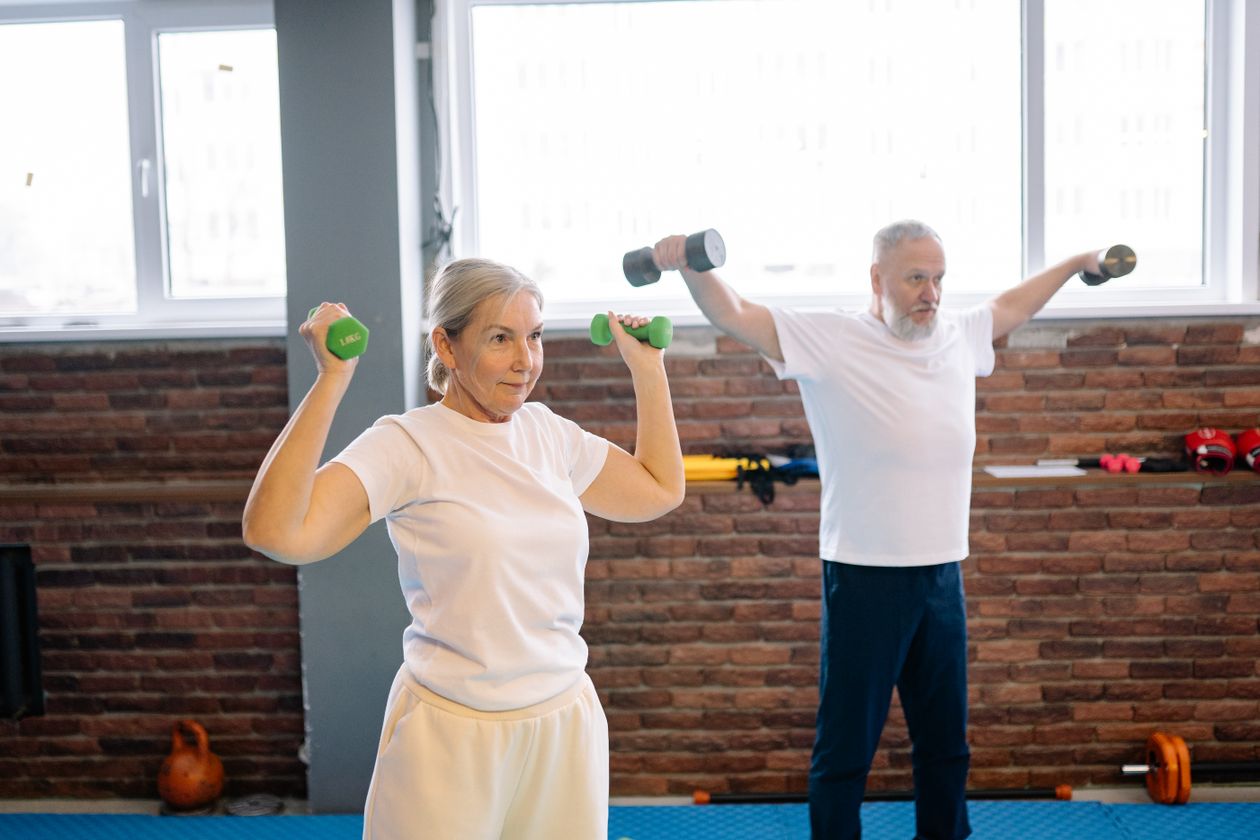
- Both groups got stronger, with no difference between them. Leg press strength and chair-stand performance improved significantly in both groups, with no between-group difference. On strength and everyday function — the things that decide whether you can climb stairs or get out of a chair — eating mostly plants did not hold anyone back.
- Both groups built muscle — but the standard-diet group built more. Appendicular muscle mass rose by 0.38 kg in the vegetarian group (95% CI 0.12 to 0.64; P = 0.004) and by 0.66 kg in the omnivorous group (95% CI 0.40 to 0.93; P < 0.001). The between-group difference was −0.33 kg (95% CI −0.69 to 0.03). Because the trial's "not worse" margin was 0.25 kg, noninferiority was not established — the study could not show the plant diet matched the standard diet on muscle gain.
- The likely reason is the amount, not the source. Both groups met the 1.2 g/kg/day target, but only just on the plant side: the vegetarian group averaged 1.24 g/kg/day (76% plant protein), while the omnivorous group averaged 1.58 g/kg/day (67% animal protein) — a difference of −0.33 g/kg/day (95% CI −0.49 to −0.17). Noninferiority for protein intake was also not established. Because the two groups ate different amounts of protein, the trial cannot separate "plants vs meat" from "less protein vs more protein." The group that ate more protein built more muscle, whichever way you read the labels.
- "Not proven equal" is not the same as "proven worse." The confidence interval for the muscle difference (−0.69 to 0.03 kg) includes zero, so the data are also compatible with no real difference at all. What the trial proves is that both diets plus lifting built muscle and strength in 12 weeks; what it does not prove is that a gram of plant protein equals a gram of animal protein. That is a narrower, more honest conclusion than either side of the diet debate would like.
- A 2025 study points the same way. A separate trial published in the Journal of Nutrition in 2025 found that a well-planned vegan diet did not lower daily muscle protein synthesis compared with an omnivorous diet in active older adults. The recurring word is "well-planned": the plants can do the job, but the plan — hitting the protein number, every day — is what makes sure they do.
What it doesn't prove
Five honest caveats. First, the diet was lacto-ovo vegetarian, not vegan — dairy and eggs were included, so this says nothing directly about a diet with no animal foods at all. Second, the protein amounts differed between groups, so the study cannot tell you whether plant and animal protein are equivalent gram for gram; a trial that holds the amount equal would be needed for that. Third, participants chose their own foods and reported what they ate in three-day food records, which are honest but imperfect — people misremember portions. Fourth, there was no group that did not train, so the trial cannot separate the effect of the diet from the effect of the lifting; everyone trained, and training was doing much of the work. Fifth, it was 12 weeks, in one country, in healthy volunteers with an average BMI of 25.7. It says nothing about a year of eating this way, about people with frailty or chronic disease, or about protein intakes well above 1.6 g/kg/day.
What it means after 40
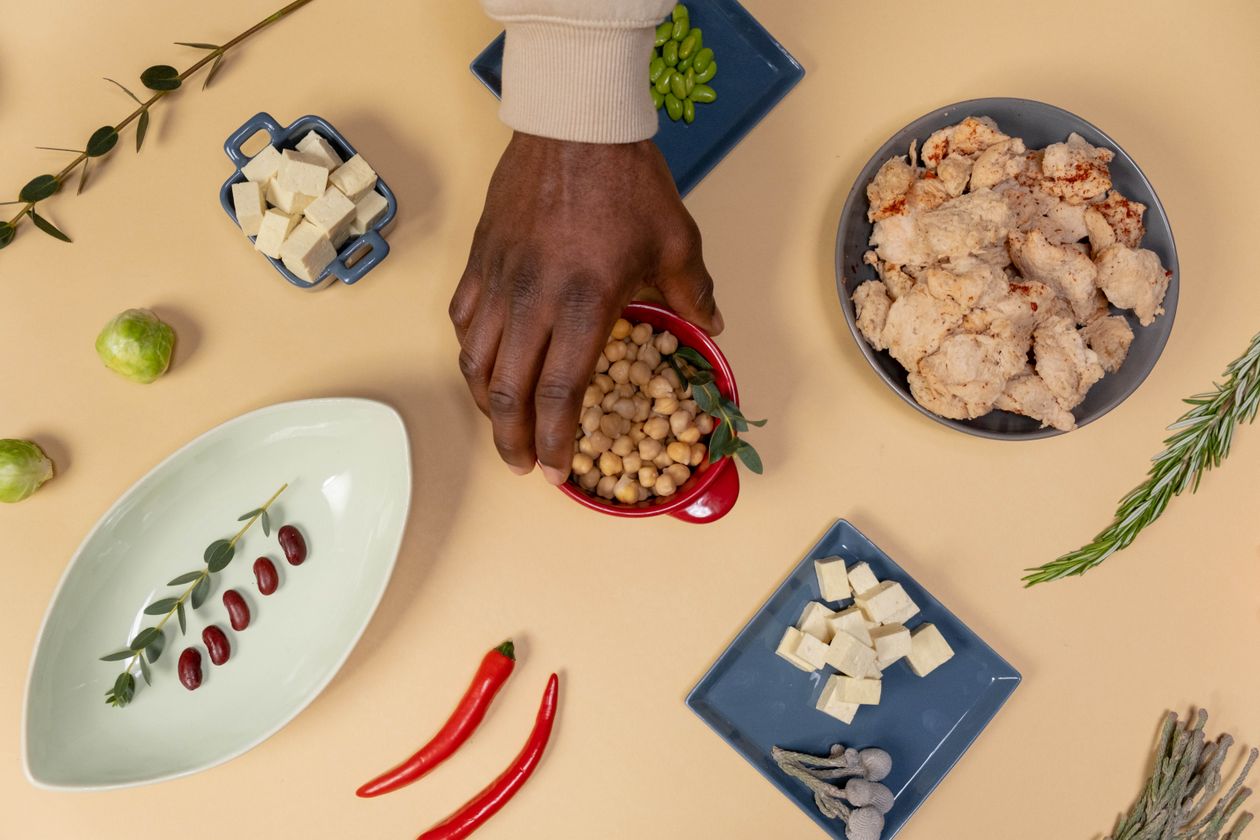
If you already eat mostly plants, the practical takeaway is not to switch diets — it is to count. Work out your number first: at the trial's target of 1.2 grams per kilogram a day, a 150-pound person needs about 82 grams of protein daily, and someone at 180 pounds needs about 98. Then check whether you are actually reaching it, because plant foods are filling and lower in protein per bite, so it is easy to feel full long before the number is met. The pattern that trips most people up is a protein-light breakfast and lunch with nearly everything loaded into dinner; spreading roughly 25 to 35 grams across each main meal — tofu or tempeh, lentils, beans, edamame, soy milk, or a plant protein powder as the anchor — is the simplest fix. And keep the other half of the equation in place: protein without resistance training builds very little. Everyone in this trial lifted three times a week, and that is what told their bodies to put the protein to work. If you are in your 40s or 50s and thinking about going plant-based, the trial is reassuring on the question that matters most — strength — and a reminder that the number on the plate, not the label on the diet, is what your muscles are counting.
Sources
van Oppenraaij, S. L., Weijs, P. J. M., & Verlaan, S. (2026). "Effects of a self-selected vegetarian compared with an omnivorous diet on protein intake and muscle mass in older adults during resistance exercise: the IMPACT randomized controlled trial," American Journal of Clinical Nutrition, 124(5):101533, published online September 22, 2026, DOI: 10.1016/j.ajcnut.2026.101533 (108 adults 55+, median age 66 [IQR 62–69], 58% women, BMI 25.7 kg/m²; 12-week resistance training 3x/week; lacto-ovo vegetarian ≥60% plant protein vs omnivorous ≥60% animal protein; target ≥1.2 g/kg/d; protein intake 1.24 g/kg/d [76% plant] vs 1.58 g/kg/d [67% animal], difference −0.33 g/kg/d [95% CI −0.49, −0.17]; appendicular muscle mass +0.38 kg [95% CI 0.12, 0.64; P = 0.004] vs +0.66 kg [95% CI 0.40, 0.93; P < 0.001], between-group difference −0.33 kg [95% CI −0.69, 0.03]; noninferiority margins 0.12 g/kg/d and 0.25 kg, not established for either outcome; leg press strength and chair stand improved in both groups with no between-group difference; ClinicalTrials.gov NCT06172725). Full text: doi.org/10.1016/j.ajcnut.2026.101533. PubMed abstract: pubmed.ncbi.nlm.nih.gov/42772454.
Plain-language summary and context: Mavy Wellness, "A New Study Put 108 Adults Over 55 on Plant Protein and Strength Training. Here's What Happened." (November 3, 2026) (108 adults, median 66, 58% women; 12 weeks, 3x/week training; 1.24 vs 1.58 g/kg/day; +0.38 vs +0.66 kg muscle; strength and chair-stand gains equal; the protein-amount confound).
Noninferiority detail and secondary numbers: Healthspan Intel, "Meat-Free Muscle: Real Gains, Rough Math" (November 4, 2026) (noninferiority margin 0.25 kg not met; between-group muscle difference −0.33 kg, 95% CI −0.69 to 0.03; lacto-ovo vegetarian, not vegan; intake from 3-day food records; no non-training control arm).
Well-planned vegan comparison: Domić, J., et al. (2025). "A well-balanced vegan diet does not lower daily muscle protein synthesis compared with an omnivorous diet in active older adults," Journal of Nutrition (cited in the Mavy Wellness write-up).
Protein plus strength training background: Health After 40 Science, "Protein Plus Strength Training Beat Training Alone for Grip Strength — A 2026 Meta-Analysis in Older Adults" (October 11, 2026) (18 trials, 1,341 adults 60+; adding protein to resistance or functional exercise improved grip strength and muscle mass vs exercise alone).
Studies cited · Evidence summarized, not medical advice
Keep Going
▶️ Watch the videos: Health After 40 Science on YouTube
🌐 Guides, reviews & free checklists: healthafter40science.com
📚 The Health After 40 Bundle — all five guides in one: get the bundle
Get the Free Weekly Email: