90 to 119 Minutes of Strength Training a Week Linked to 13% Lower Death Risk — A 30-Year Harvard Study
The 150-minutes-of-cardio guideline is famous. The "how much" of strength training was fuzzier — until now. A Harvard team tracked 147,374 adults across three long-running cohorts for up to 30 years and found a sweet spot: about 90 to 119 minutes of resistance training a week. More than two hours didn't add anything.
How the study worked
The analysis, published June 2, 2026 in the British Journal of Sports Medicine by Yiwen Zhang, Dong Hoon Lee, Yuan Ma, and Edward Giovannucci of the Harvard T.H. Chan School of Public Health, pooled three of the best-studied cohorts in the US: the Health Professionals Follow-Up Study (31,540 men, 1992–2022), the Nurses' Health Study (2002–2021), and the Nurses' Health Study II (2003–2021) — 115,834 women between the two. Participants ranged from 19 to 94 with a median age of 54, and reported their exercise habits — both strength training and aerobic activity — through detailed questionnaires every two to four years. During follow-up, about 36,000 deaths were recorded, enough to break down by cause: all-cause, cardiovascular, neurological disease, and cancer.
The researchers' main question was dose-response: not just "does strength training help?" but "how much is the right amount?" — and they adjusted the resistance-training numbers for aerobic exercise, so the strength effect reported is on top of whatever cardio people were doing. Activities counted included push-ups, squats, lunges, and weightlifting — dumbbells, machines, bands, and bodyweight.
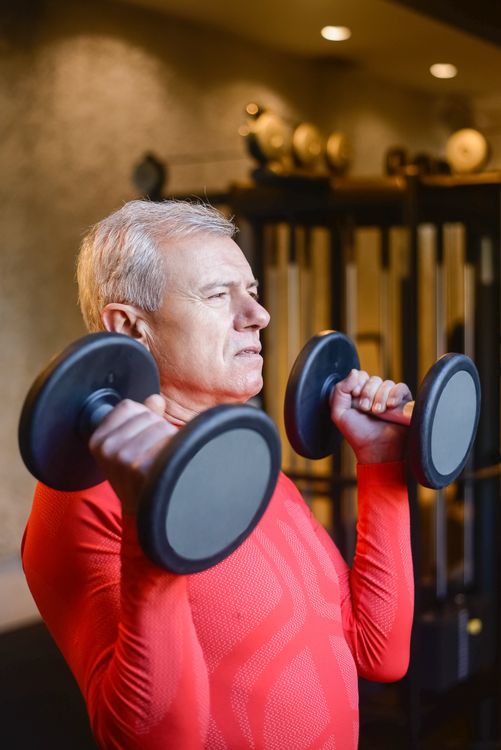
The findings, plainly
- 13% lower risk of death overall. Adults averaging 90–119 minutes of resistance training a week had a hazard ratio of 0.87 for all-cause mortality versus those doing none (95% CI 0.81–0.95) — even after accounting for aerobic exercise.
- 19% lower heart-disease death risk. Cardiovascular mortality came in at HR 0.81 in the 90–119-minute group — the sweet-spot dose again.
- 27% lower death from neurological diseases. The most striking figure: HR 0.73 for deaths from neurological diseases, mostly Alzheimer's and Parkinson's. The authors found a significant curved (quadratic) dose-response for these causes.
- The plateau: more isn't better. Past about 120 minutes a week, the curve flattened — at ≥120 minutes, all-cause mortality was HR 0.92, no additional benefit over the 90–119-minute dose. Roughly two hours a week appears to max out the longevity return.
- The cancer twist. Lower cancer mortality showed up only at smaller doses — 1–29 minutes a week (HR 0.91) and 30–59 minutes a week (HR 0.88), compared with people doing little aerobic exercise and no resistance training. For cancer, the dose-response did not follow the same sweet-spot pattern.
- The best combination. People doing both aerobic and resistance training had the lowest risk of all: 30 to under 45 MET-hours a week of aerobic exercise plus 60–119 minutes of resistance training meant HR 0.55 — about 45% lower mortality than doing neither. At very high aerobic levels (≥45 MET-hours/week), risk was 42–47% lower regardless of resistance training.
What it doesn't prove
This is observational research — it maps patterns, it can't prove that lifting weights causes the lower death rate. People who strength-train regularly may differ from non-trainers in ways the researchers couldn't fully measure: diet, sleep, wealth, medical care. Exercise was self-reported, which always introduces some error, and the study had no information on the intensity of the resistance training or the duration of individual sessions — so we can't say whether slow, heavy lifting and light, fast circuits behave the same way. Calisthenics and Pilates were also excluded from the resistance-training measure, so their contribution is invisible here. And the participants were mostly white health professionals, which limits how confidently the numbers generalize to other populations.
It also doesn't overturn the aerobic story: the biggest mortality reductions still belonged to people combining both types of exercise, and the findings explicitly "support current recommendations encouraging both types of activity." The new information is about the resistance-training dose — roughly 90 to 120 minutes — that appears to capture most of the benefit.
What it means after 40
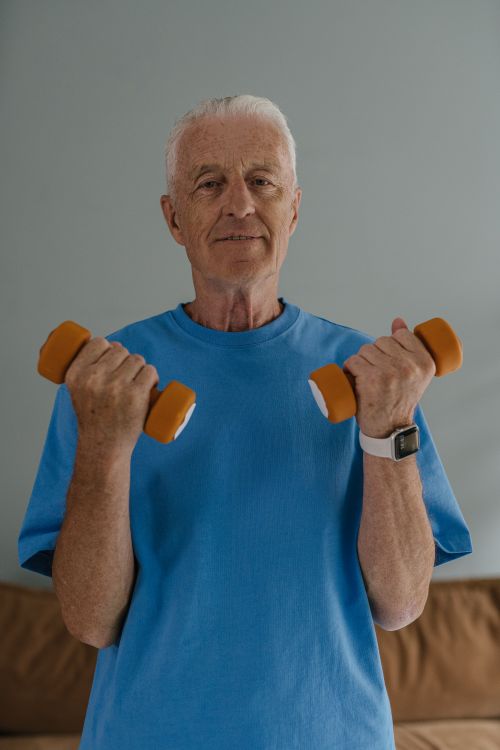
The honest headline is about dose, not magic. If you're in your 40s or 50s, the practical math is simple: two 45-minute sessions or three 30-minute sessions of resistance work a week — push-ups, squats, lunges, bands, dumbbells — lands you in the 90–119-minute band where the benefit peaked. If you currently do none, the study's curve says the first minutes matter most; Giovannucci himself put it plainly: "For people who are less active, the key message is that small amounts can still matter. Building a routine gradually may be more important than trying to do a lot at once."
And if you already lift several hours a week, there's no signal here that more buys more longevity — though it may buy strength, skill, or enjoyment, which are their own reasons. Keep the cardio: the 45% lower mortality belonged to the strength-plus-aerobic group, not the lifters alone. As always, if you have a heart condition, osteoporosis, joint problems, or are returning after a long layoff, talk to your own clinician before starting a new routine.
Sources
Zhang Y, Lee DH, Rezende LFM, Ma Y, Giovannucci E, "Long-term resistance training with all-cause and cause-specific mortality: assessing dose-response and joint associations with aerobic physical activity," British Journal of Sports Medicine 2026;60(12):874–883. DOI: 10.1136/bjsports-2025-110503 (PMID: 42230125; PMCID: PMC13397323). Harvard T.H. Chan School of Public Health press release: "Moderate amount of strength training each week could boost longevity" (June 9, 2026). Hazard ratios and joint-effect figures cross-checked against HealthDay's June 4, 2026 report: "Resistance Training Tied to Lower Risk for Death Across Causes".
Study cited · Evidence summarized, not medical advice
Keep Going
▶️ Watch the videos: Health After 40 Science on YouTube
🌐 Guides, reviews & free checklists: healthafter40science.com
📚 The Health After 40 Bundle — all five guides in one: get the bundle
Get the Free Weekly Email: