The Lifestyle Program That Beat Basic Health Advice by 55% for Brain Health
Most brain-health advice sounds the same: eat better, move more, stay sharp, stay social. The question has always been whether doing all of those things together — with real coaching and regular group support, not just a pamphlet — actually moves the needle more than being told to do them. A large randomized trial published in The Lancet in 2026 says yes, and by a wide margin. In 1,065 adults ages 60 to 77 across 11 Latin American countries, a structured two-year lifestyle program produced a 55% greater improvement in overall cognitive performance than general health advice. The exercise was supervised. The eating plan was adapted to local food. The brain training was regular. And the participants met as a group 38 times. It was the structure — not any single habit — that made the difference.
How the study worked
The trial was LatAm-FINGERS — the Latin American Initiative for Lifestyle Intervention to Prevent Cognitive Decline — led by Lucía Crivelli, PhD, of Fleni, a neurological institute in Buenos Aires, and funded by the Alzheimer's Association. It is part of the World-Wide FINGERS network, built on the original Finnish FINGER trial, and it ran in parallel with the US POINTER trial. The results were presented at the Alzheimer's Association International Conference (AAIC) 2026 in London and published simultaneously in The Lancet.
Of 1,719 people assessed, 1,065 were enrolled and randomly assigned to one of two groups. They were 60 to 77 years old (mean age 67.5), 75% were women, and all were at high risk of dementia — they carried cardiovascular risk factors and scored 6 or higher on a dementia risk score — with cognitive performance that was below optimal but not yet impaired. Enrollment ran from October 2021 to July 2023, and the last participant finished follow-up in November 2025.
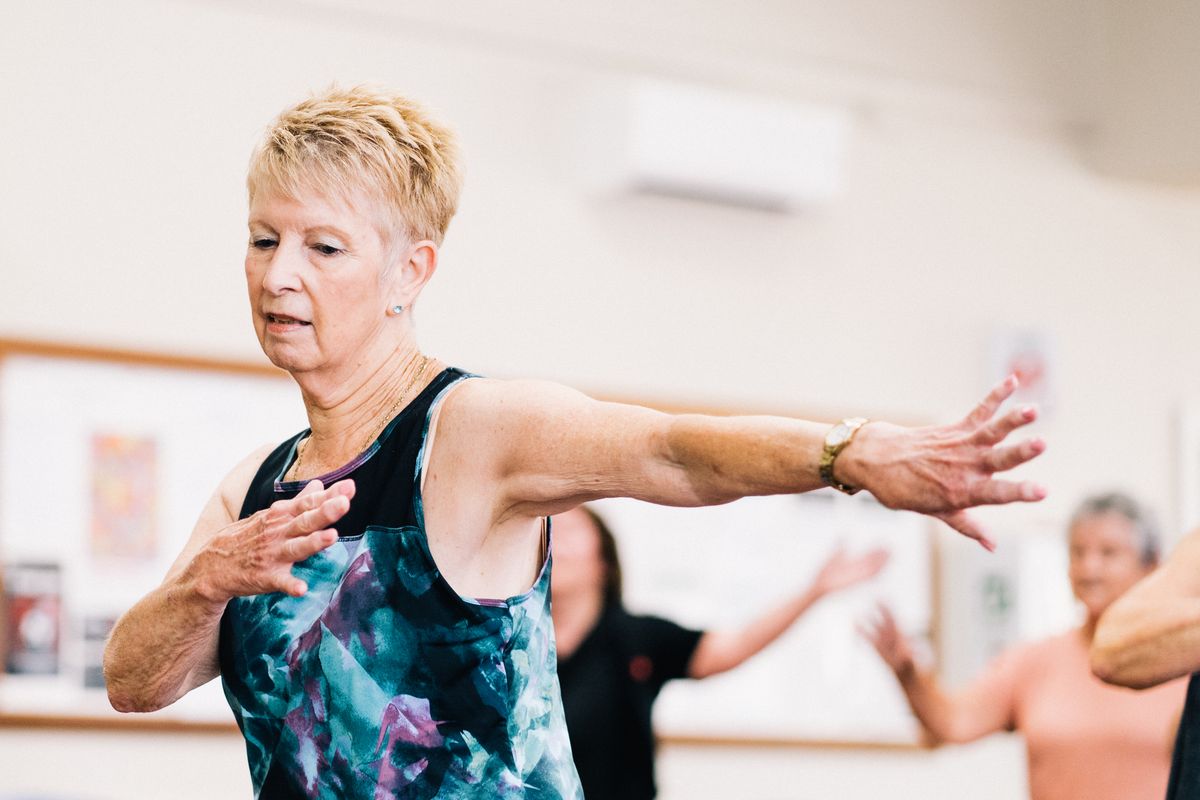
The 539 people in the Systematic Lifestyle Intervention group got the full program for two years: supervised exercise (including culturally familiar activities like salsa and tango, plus outdoor group exercise in public parks), nutrition counseling based on the MIND diet adapted to regional foods — avocado, quinoa, açaí, aguaymanto, chia and pumpkin seeds in place of foods that were harder to find locally — computerized cognitive training, cardiovascular risk monitoring, and 38 group meetings for social connection and accountability. The 526 people in the Flexible Lifestyle Intervention group got periodic health education and general lifestyle recommendations, with just four group meetings over the same two years and no ongoing coaching or supervision. In other words, both groups were told roughly the same things. Only one group was helped to actually do them, together, week after week.
The findings, plainly
- 55% greater improvement in overall cognition. After two years, the structured group improved 55% more on a composite measure of global cognition than the group that received general advice.
- The gains were broad, not narrow. The structured group also showed significantly greater improvements in memory, executive function (planning and organizing), and processing speed — not just on one test.
- It worked across very different places. The trial ran at 12 sites in 11 countries — Argentina, Bolivia, Brazil, Chile, Colombia, Costa Rica, Dominican Republic, Ecuador, Mexico, Peru, and Uruguay — with wide racial, ethnic, educational, and socioeconomic diversity. The program was adapted to each culture rather than simply translated.
- Structure and social support were the difference. As the Alzheimer's Association's Heather M. Snyder put it in the release: "A key message from this study is that structure and social support matter." The advice-only group got four meetings in two years; the structured group got 38.
- It confirms the US result in a second part of the world. LatAm-FINGERS builds on and reinforces the US POINTER trial, which found the same pattern — structured coaching plus peer support beat a self-guided approach. The Alzheimer's Association has invested more than $81 million in the two trials combined.
What it doesn't prove
Three honest caveats. First, the trial measured changes in cognitive performance over two years — it did not establish whether participants were less likely to go on to develop dementia. A 55% greater improvement on test scores is a real result, but it is not the same as preventing dementia, and longer follow-up is needed to answer that question. Second, the participants were specifically chosen for high dementia risk and suboptimal cognition, so the size of the benefit may not apply to people at average risk. Third, this was a package deal by design: exercise, diet, brain training, heart-risk monitoring, and social contact all happened together, so the trial cannot say which ingredient mattered most — or whether one alone would do much at all. That is the point the researchers themselves make: dementia risk is shaped by many factors at once, and addressing several together is likely what produced the effect.
What it means after 40
If you are in your 40s, 50s, or early 60s, this trial was not run on your age group — the participants were 60 to 77. But the lesson points earlier, not later: the people in this study were chosen because their risk was already high, and the program still helped. Starting the same habits a decade or two sooner is the bet the science supports, even if this trial cannot prove the size of the payoff for younger adults. And the practical takeaway is not "do five things perfectly." It is that a program with structure — a regular class, a walking group, a coach or a group that notices when you do not show up — beats knowing what to do. The advice-only group in this trial knew what to do too. They just did not have the scaffolding.
None of the five pieces is exotic, and that is the encouraging part. Supervised or group exercise you will actually attend. A MIND-style eating pattern — leafy greens, berries, whole grains, beans, nuts, olive oil, fish — built from foods you can find where you live, the way this trial swapped in avocado, quinoa, and chia. Some kind of regular mental challenge. Keeping blood pressure and other heart risks in check. And regular contact with other people, ideally in a group that meets on a schedule. If you can only add one piece, add the one that comes with other people attached — a class, a club, a group walk — because in this trial, the social structure was what turned good advice into a measurable result.
Sources
Crivelli L, et al., "Multidomain lifestyle intervention for the prevention of cognitive decline in at-risk older adults in Latin America (LatAm-FINGERS): a single-blind, multicentre, randomised controlled trial," The Lancet 2026; 408 (10553): 417, DOI: 10.1016/S0140-6736(26)01278-X (presented at the Alzheimer's Association International Conference 2026, London; 1,719 assessed, 1,065 enrolled and randomly assigned — Systematic Lifestyle Intervention n=539, Flexible Lifestyle Intervention n=526; ages 60–77, mean age 67.5 years, 75% women, high dementia risk [dementia risk score ≥6] with suboptimal cognitive performance; enrolled October 27, 2021–July 7, 2023; last follow-up November 7, 2025; 12 sites in 11 countries — Argentina, Bolivia, Brazil, Chile, Colombia, Costa Rica, Dominican Republic, Ecuador, Mexico, Peru, Uruguay; SLI: supervised exercise, MIND-diet nutrition counseling, computerized cognitive training, cardiovascular risk monitoring, 38 group meetings over 2 years; FLI: periodic health education and general recommendations, 4 group meetings; after 2 years, SLI showed 55% greater improvement on a composite measure of global cognition, with significantly greater improvements in memory, executive function, and processing speed; trial registered at ClinicalTrials.gov NCT06492967). Institutional press release: Alzheimer's Association via BioSpace, "Lifestyle program improves brain health among older adults at risk for dementia across Latin America" (AAIC 2026) (Lucía Crivelli on cultural adaptation; Laura D. Baker on diversity and the US POINTER comparison; Heather M. Snyder: "structure and social support matter"; Alzheimer's Association investment of more than $81 million in LatAm-FINGERS and US POINTER). Independent coverage: Medical Dialogues, "Lifestyle Changes May Improve Cognition 55 Percent More Than Basic Health Guidance" (2026) (trial did not establish whether the program prevents dementia; larger and longer studies needed). Trial record: PubMed abstract, PMID 42442374.
Studies cited · Evidence summarized, not medical advice
Keep Going
▶️ Watch the videos: Health After 40 Science on YouTube
🌐 Guides, reviews & free checklists: healthafter40science.com
📚 The Health After 40 Bundle — all five guides in one: get the bundle
Get the Free Weekly Email: