Normal at the Doctor's, High at Home: The Hidden Blood Pressure Pattern Linked to 70% More Falls
You have probably heard of white coat syndrome — blood pressure that spikes in the exam room but is fine at home. The reverse exists too, and it is harder to catch: masked hypertension, where the office reading looks perfectly normal while blood pressure at home runs high. New research presented at the American Heart Association's Hypertension Scientific Sessions in October 2026 suggests that gap matters more than anyone expected. In 758 adults ages 78 to 98, those with masked hypertension had a 70% higher risk of falls than people whose blood pressure was high in both settings. It is a preliminary finding, not yet peer-reviewed — but it is a strong argument that one good reading at the doctor's office may not be the whole story.
How the study worked
The analysis drew on the Atherosclerosis Risk in Communities (ARIC) study, a long-running US study that began enrolling participants in 1985 in four communities: Forsyth County, North Carolina; Jackson, Mississippi; eight northern suburbs of Minneapolis, Minnesota; and Washington County, Maryland. The 758 participants in this analysis were 78 to 98 years old, with a median age of 83; 59% were women and 17% self-identified as Black adults. Most of them — 82% — were already taking medication to lower their blood pressure.
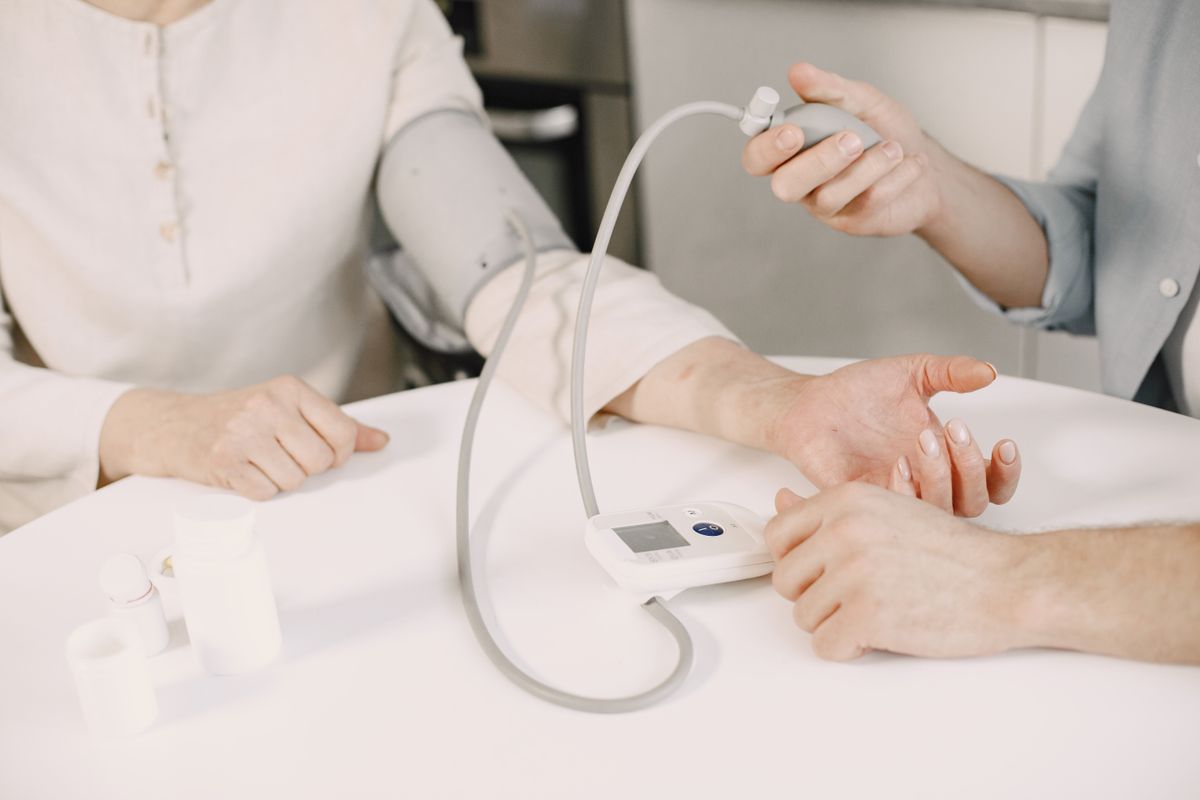
Each participant had their blood pressure measured in two places. In the office, researchers took three readings one minute apart after five minutes of seated rest. At home, participants used a take-home monitor, taking readings in the morning and evening over eight non-consecutive days in 2023. Falls were tracked by self-report during annual phone calls, with participants reporting how many falls they had experienced in the previous 12 months. The presenting author was Frances Wang, PhD, MS, a researcher at Beth Israel Deaconess Medical Center in Boston.
The four blood pressure patterns broke down like this: 34.5% of participants had sustained high blood pressure (high in both settings), 17.0% had white coat hypertension (high in the office, normal at home), 15.4% had masked hypertension (normal in the office, high at home), and 33.2% had normal readings in both places. Over a median follow-up of nearly a year (350 days), almost one in four participants — 23.4% — reported at least one fall in the previous 12 months.
The findings, plainly
- Masked hypertension was linked to a 70% higher fall risk. People whose blood pressure was normal in the office but high at home had a 70% higher risk of falls than people whose blood pressure was high in both settings.
- About 1 in 6 had the masked pattern. 15.4% of the 758 participants had masked hypertension — normal office readings, elevated home readings. Another 17.0% had the opposite pattern, white coat hypertension.
- Falls were common in this age group. 23.4% of participants — nearly one in four — reported at least one fall in the previous 12 months, over a median follow-up of 350 days.
- White coat hypertension went the other way. People whose readings were high only in the office had a lower fall risk than those with high readings in both settings.
- The lower the office reading relative to home, the higher the fall risk. When the researchers analyzed the office–home difference as a continuous measure, lower office blood pressure relative to home blood pressure was associated with a higher incidence of falls.
- This is preliminary. The work was presented as a conference abstract, not a peer-reviewed paper. Abstracts at AHA scientific meetings are not peer-reviewed, and the findings are considered preliminary until published as a full manuscript.
What it doesn't prove
Three honest caveats. First, this is a conference abstract, so it has not gone through full peer review — the numbers should be read as presented, not as settled, and the full manuscript has not yet appeared. Second, the study cannot say why masked hypertension was linked to more falls. As Dr. Karol E. Watson of UCLA, an AHA volunteer expert who was not involved in the study, put it in the Association's release: "This study doesn't explain why the fall risk was higher, but it may be telling us something about blood pressure variability and how well older adults are able to regulate their blood pressure (or not) throughout the day." The authors themselves note the same gap. Third, the participants were 78 to 98 years old — a rapidly growing but under-studied population — so the fall numbers apply to that age group, not directly to people in their 40s, 50s, or 60s. Falls were also self-reported in phone interviews, which can miss or misremember events. And because the design is observational, it shows an association, not proof that the masked pattern causes falls.

What it means after 40
If you are in your 40s, 50s, or early 60s, this study is not about your fall risk today — its participants were decades older. But the underlying lesson still lands, and it is the one the researchers and the AHA want people to hear: a normal reading at the doctor's office does not always mean your blood pressure is controlled. Masked hypertension can affect people of any age, according to Dr. Daniel W. Jones, chair of the AHA's 2025 blood pressure guideline writing committee, and it is associated with being overweight or having obesity, sleep apnea, and diabetes — and it is more common among Black adults. Home monitors are inexpensive, and the AHA's 2025 guideline recommends out-of-office monitoring to confirm a diagnosis, help adjust treatment, and identify exactly these patterns — white coat and masked hypertension.
That does not mean everyone needs a home monitor tomorrow. But if you have risk factors for high blood pressure — extra weight, sleep apnea, diabetes — and your office readings always look fine, it is worth discussing home monitoring with your clinician, even if your appointments look reassuring. The practical version is simple: take readings the way the study did — seated, back supported, feet flat, after a few minutes of rest, morning and evening over several days — and bring the log to your appointment. A home cuff will not prevent a fall on its own. What it can do is show you and your doctor the numbers your office visits never see, years before the age group in this study, when there is still time to act on them.
Sources
Wang F, et al., "Elderly adults with masked high blood pressure had higher risk of falls," abstract presented at the American Heart Association Hypertension Scientific Sessions 2026, Arlington, Virginia, October 7–11, 2026 (presented October 9, 2026; 758 adults ages 78–98, median age 83, 59% women, 17% Black, from the Atherosclerosis Risk in Communities [ARIC] study; 82% taking blood pressure medication; office: three readings one minute apart after five minutes of seated rest; home: morning and evening readings over eight non-consecutive days in 2023; falls self-reported during annual phone calls; 34.5% sustained hypertension, 17.0% white coat hypertension, 15.4% masked hypertension, 33.2% normal; median follow-up 350 days; 23.4% reported at least one fall in the previous 12 months; masked hypertension associated with 70% higher fall risk vs sustained hypertension; white coat hypertension associated with lower fall risk vs sustained hypertension; lower office blood pressure relative to home blood pressure associated with higher fall incidence when analyzed continuously; abstract, not peer-reviewed — findings preliminary until published as a full manuscript). Institutional press release: American Heart Association, "Elderly adults with masked high blood pressure had higher risk of falls" (October 9, 2026). Independent coverage: The Healthy, "A Hidden Blood Pressure Problem Could Increase Your Fall Risk" (October 21, 2026) (Dr. Karol E. Watson on blood pressure variability; Dr. Daniel W. Jones on masked hypertension risk factors and the AHA 2025 guideline recommending out-of-office monitoring; CDC: falls are the leading cause of disability and functional decline in adults 65+).
Studies cited · Evidence summarized, not medical advice
Keep Going
▶️ Watch the videos: Health After 40 Science on YouTube
🌐 Guides, reviews & free checklists: healthafter40science.com
📚 The Health After 40 Bundle — all five guides in one: get the bundle
Get the Free Weekly Email: