Tai Chi Cut Fear of Falling and Sharpened Balance Across 21 Trials — New 2026 Review
Falls are the second most common cause of injury-related death in older adults, according to the WHO. A new 2026 review pooled 21 randomized trials of tai chi in healthy adults over 60 — and found real, measurable gains in balance, walking speed, and confidence. With one important catch about how often you practice.
How the study worked
The review, published in 2026 in Frontiers in Public Health by Runqiang Dong and colleagues, searched international and Chinese databases for randomized controlled trials published between 2004 and 2024. Twenty-one trials made the cut: each tested tai chi against a non-exercise control group, in healthy adults aged 60 and older who hadn't practiced tai chi in the prior six months. Programs ran 4 to 26 weeks, with sessions of 30 to 90 minutes, in styles including Yang 24-form, simplified 24-form, and Chen-style tai chi. The review was registered in advance with PROSPERO (CRD420251004905).
Rather than counting actual falls, the trials measured balance and fall risk with standard clinical tests: the Berg Balance Scale, the Timed Up and Go test (stand up, walk 3 meters, turn, sit down), one-leg standing time, functional reach distance, maximum walking speed, and self-reported fear of falling. The researchers pooled the results and graded the evidence quality for each outcome.
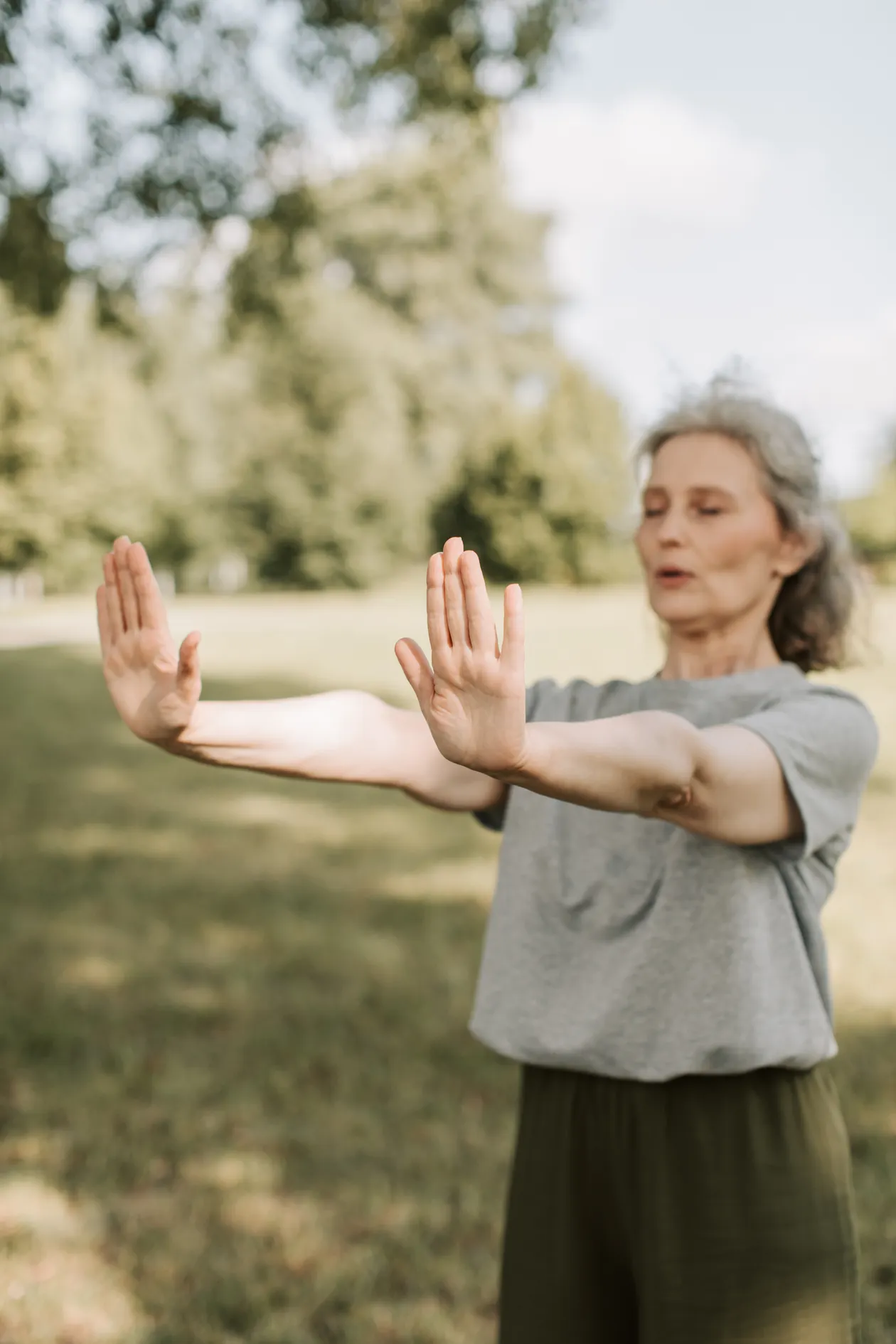
The findings, plainly
- Fear of falling dropped substantially. Across 4 trials, tai chi reduced fear-of-falling scores with a standardized effect of −0.83 (95% CI −1.24 to −0.42, p < 0.0001) — a large effect, and one the authors rated as high-quality evidence.
- Walking speed improved. In 4 trials with zero statistical heterogeneity, maximum walking speed rose significantly — also rated high-quality evidence, and faster gait is itself a well-established marker of lower fall risk.
- Balance tests moved in the right direction. Berg Balance Scale scores (5 trials), one-leg standing time (12 trials), functional reach distance, and Timed Up and Go times all improved significantly versus controls.
- The frequency catch. In subgroup analysis of one-leg standing, practicing 5–7 times per week produced significant gains — but 1–2 and 3–4 times per week did not reach statistical significance. A casual once-a-week class may not be enough for this measure.
- One outcome missed. The Falls Efficacy Scale — a questionnaire about confidence during daily activities — did not improve significantly, a reminder that objective gains and felt confidence don't always move together.
What it doesn't prove
This is a review of balance tests, not a fall-counting trial — it shows tai chi improves the things that predict falls (balance, gait speed, fear), not that it prevented a specific number of falls. The 21 trials used different tai chi styles, durations, and measurement tools, and heterogeneity was high for several outcomes (up to I² = 99% for the Falls Efficacy Scale), which is why the authors urge standardized protocols in future work. All participants were healthy adults 60 and older, so the findings don't automatically extend to people with Parkinson's, severe osteoporosis, or major balance impairment — and anyone with those conditions should clear a new exercise with their clinician first.
It's also worth noting the comparison was tai chi versus no exercise. The review doesn't say tai chi beats strength training, physical therapy, or other balance programs — only that it's better than doing nothing, which matters because it's gentle, needs no equipment, and is easy on the joints.
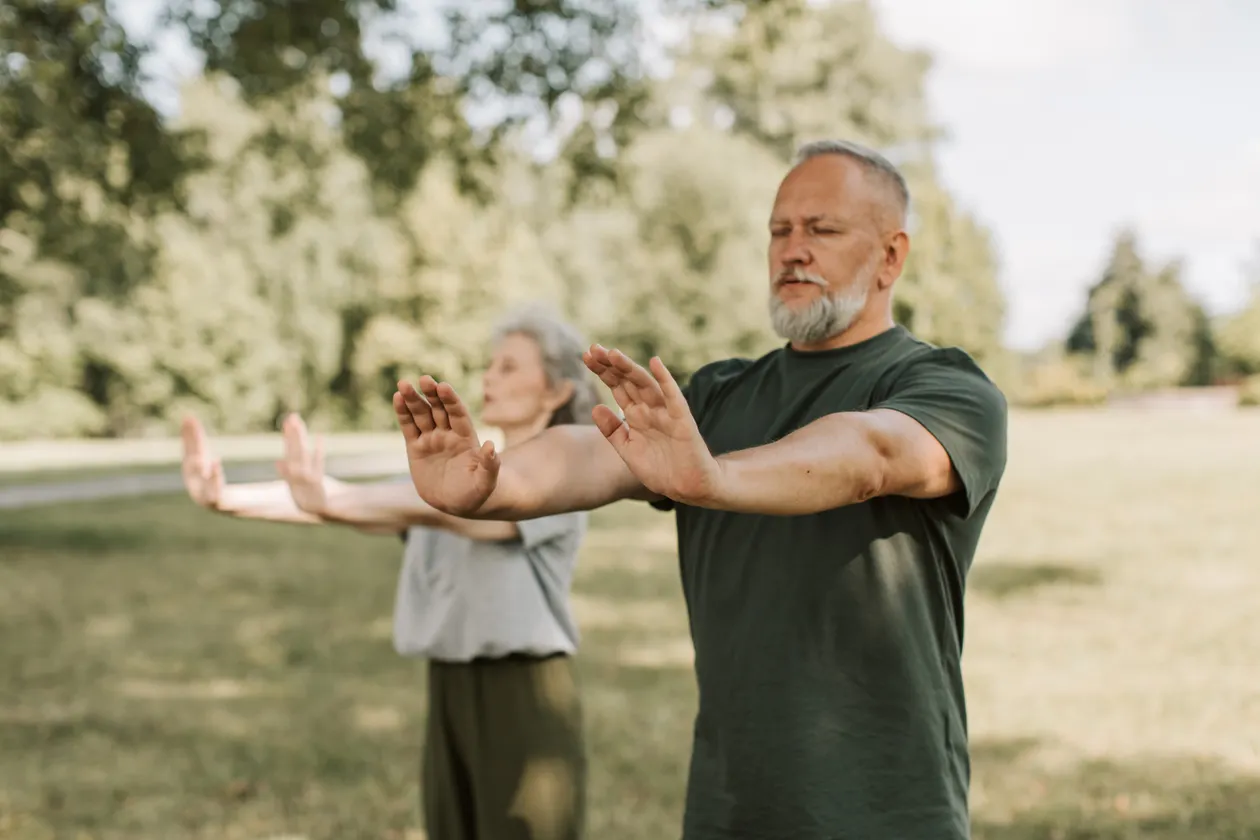
What it means after 40
The honest headline is a two-parter: tai chi works for balance, and dose matters. The frequency finding is the most practical detail in the whole review — the one-leg-standing gains only showed up at 5–7 sessions per week. That sounds like a lot, but tai chi sessions can be 20–30 minutes at home, not hour-long classes, and the slow, weight-shifting movements are exactly what trains the balance systems that degrade with age: ankle and hip control, single-leg support, and attention under movement.
If you're in your 40s or 50s, think of this as prevention with a long runway — the trials were in 60+ adults, but balance training compounds over decades, and tai chi doubles as stress relief and gentle cardio. Start with a beginner class or a reputable video series, practice the short forms most days, and treat it like brushing your teeth: the benefit comes from repetition, not intensity.
Sources
Dong R, Hamzah MSG, Awang MM, Qiu J, Chen S, "Effects of Tai Chi on balance and fall prevention in healthy older adults: a randomized controlled meta-analysis," Frontiers in Public Health, 2026. DOI: 10.3389/fpubh.2025.1638006 (PMCID: PMC12815739; PROSPERO CRD420251004905). Background fall statistics (WHO 2021; Global Burden of Disease) as cited in the paper's introduction.
Study cited · Evidence summarized, not medical advice
Keep Going
▶️ Watch the videos: Health After 40 Science on YouTube
🌐 Guides, reviews & free checklists: healthafter40science.com
📚 The Health After 40 Bundle — all five guides in one: get the bundle
Get the Free Weekly Email: