Should You Still Take a Daily Aspirin? The 2026 Answer
For decades, the advice was simple: once you turned 40, a daily baby aspirin was a cheap, sensible way to protect your heart. That advice is now gone — replaced by an individual risk calculation — and 2026 brought two fresh pieces of evidence that explain why. A longer follow-up of the landmark ASPREE trial confirmed that daily low-dose aspirin did not help healthy older adults live longer or healthier lives. And a new genetics analysis of that same trial found a striking exception: in one genetic subgroup, aspirin users were about 70% less likely to develop dementia — but they bled more, by almost exactly the same amount. Neither finding is a reason to start, stop, or keep taking aspirin on your own. Both are reasons to have the conversation with your doctor.
How the advice changed
Aspirin prevents clots by making platelets — the blood cells that start clotting — less sticky. That is why it helps people who have already had a heart attack, a stroke, or a stent: for them, preventing the next clot is the whole point, and daily aspirin remains a standard part of treatment. The question was always whether it also made sense for people who had never had a cardiovascular event — so-called primary prevention. For years the answer was assumed to be yes. Then the evidence caught up. The U.S. Preventive Services Task Force changed its recommendation in 2022: it now recommends against starting a daily low-dose aspirin for primary prevention in adults 60 and older, and says adults 40 to 59 should only consider it as an individual decision with their doctor, generally when their estimated 10-year cardiovascular risk is 10% or higher.
The trial that drove much of that shift was ASPREE — Aspirin in Reducing Events in the Elderly — published in 2018. It enrolled 19,114 healthy adults, mostly 70 and older, with no previous cardiovascular disease, dementia, or physical disability, and assigned them to 100 mg of aspirin a day or a placebo for a median of 4.7 years. Aspirin did not extend disability-free survival — the trial's measure of a longer, healthier life, defined as avoiding physical disability, dementia, or death. What it did do was raise the risk of major bleeding by about 38%. A longer follow-up of the same participants, reported in January 2026, reached the same conclusion: even with several more years of tracking, aspirin did not help people live a longer or healthier life.
That is the backdrop to the renewed public discussion in 2026. In September, cardiologist Dr. Roy Flood told WTOC that daily aspirin "is no longer a blanket recommendation" for all adults over 40, because "even though you may have fewer cardiac issues, the price is paid with more GI bleeding." His framing is the current one: people with diabetes, high blood pressure, a smoking history, or a strong family history of heart disease may still be good candidates, while a healthy 45-year-old with no risk factors likely would not be prescribed it. Doctors now often use a coronary artery calcium score — a scan that checks for early plaque buildup — to settle borderline cases. As Flood put it: "If your calcium score is perfect and you're not having symptoms, and other risk factors are under control, you don't need the aspirin."
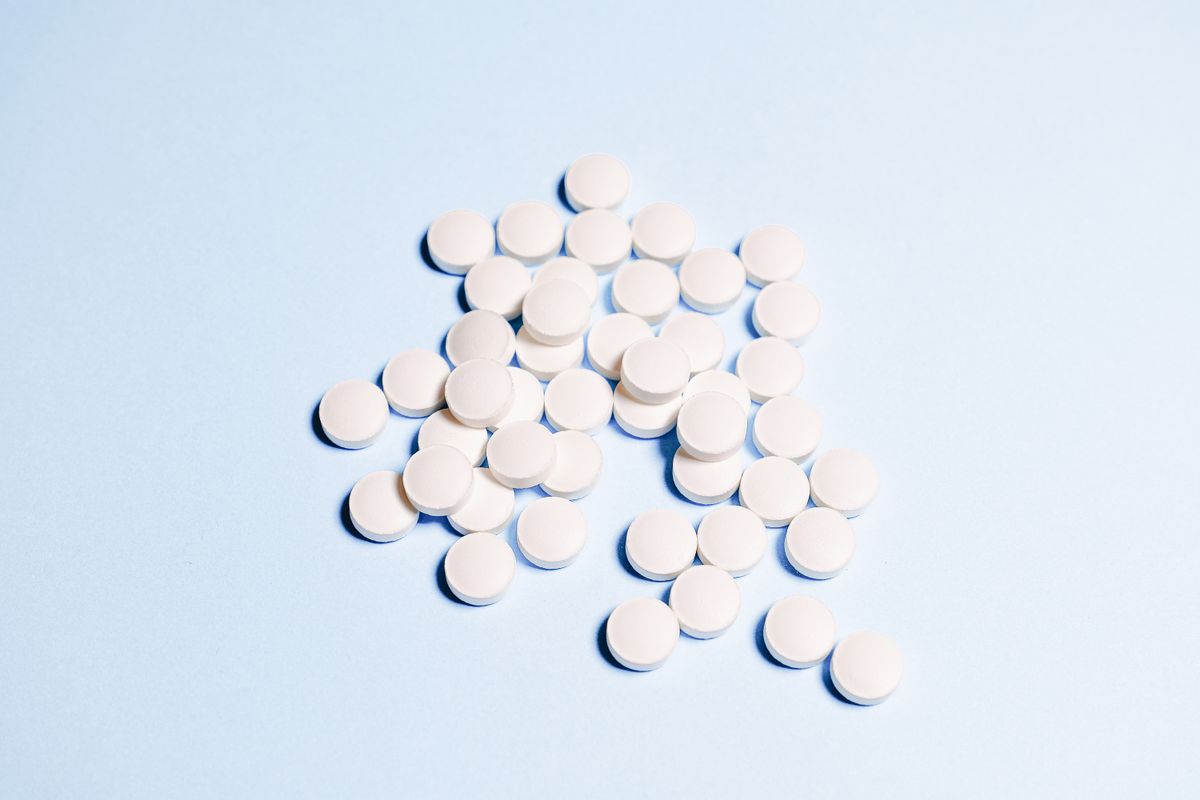
The findings, plainly
- Blanket prevention is out. The USPSTF recommends against starting daily low-dose aspirin for primary prevention at 60 and older, and an individual decision only for ages 40–59 with a 10-year cardiovascular risk of 10% or higher. The 2026 cholesterol guideline's wider statin eligibility is a separate question — the aspirin rules did not loosen with it.
- The big trial found no longevity benefit. In ASPREE's 19,114 healthy older adults, 100 mg of aspirin a day for a median of 4.7 years did not extend disability-free survival, and major bleeding risk was about 38% higher. A longer follow-up reported in 2026 confirmed the same result.
- The genetics twist is real — and narrow. A September 2026 analysis of genetic data from 13,541 ASPREE participants screened more than 5,000 polygenic risk scores. In the highest fifth of a platelet-count genetic score, dementia developed in 1.0% of aspirin recipients versus 3.3% of placebo recipients — roughly 70% lower relative risk (hazard ratio 0.28). But this was one subgroup, found in a post hoc analysis, and it needs confirmation in a trial designed for it.
- The bleeding cost matched the benefit almost exactly. In that same genetic subgroup, major bleeding occurred in 4.4% of aspirin recipients versus 2.1% on placebo (hazard ratio 2.13) — about five fewer dementia cases and about five additional major bleeding events per 1,000 person-years. The trade was one-for-one.
- Dose matters, and more is not better. Low-dose aspirin — 81 mg a day — is as effective as higher doses at preventing the clots that cause most heart attacks and strokes. Higher doses, such as 325 mg a day, raise bleeding risk without adding protection.
- Secondary prevention is unchanged. None of this applies to people who have already had a heart attack, a stroke, or a stent. For them, aspirin is usually still prescribed — and stopping it without medical advice is dangerous.
The genetics twist — and why it isn't a reason to start
The dementia finding deserves a closer look, because the 70% headline is the kind of number that travels fast and loses its context on the way. The analysis, led by Dr. Peter Fransquet at Monash University and published September 24, 2026 in Alzheimer's & Dementia, was a post hoc look back at ASPREE's genetic data — not a trial designed to test whether aspirin prevents dementia. The researchers screened more than 5,000 polygenic risk scores, which are scores built from many small genetic variants, to see whether any of them changed how aspirin related to dementia or bleeding. The strongest signal involved genes that influence platelet count. Among participants in the top fifth of that platelet-count score, aspirin was associated with a substantially lower dementia risk — but the absolute difference was 2.3 percentage points (1.0% versus 3.3%), and the same group bled more. There was no interaction with APOE, the best-known Alzheimer's risk gene, and no link with genetic scores for Alzheimer's disease itself. The authors stressed that the findings were exploratory, the mechanism is uncertain, and the results should not be used to guide aspirin treatment. There is also no clinical genetic test for this platelet score — you cannot walk into a clinic and find out whether you are in the group. What the study does is identify a group worth investigating in a purpose-built trial, not a treatment strategy.
What it doesn't prove
Three honest caveats. First, the 2026 genetics analysis cannot prove that aspirin prevents dementia, even in the subgroup — it is a post hoc subgroup finding from a trial designed to answer a different question, and subgroup findings from screening thousands of genetic scores carry a real risk of being chance. Second, the dementia and bleeding numbers in that subgroup cancel each other out almost exactly, so even if the dementia benefit were real, it would not obviously be worth the bleeding risk — and for the ASPREE population as a whole, earlier analyses found no dementia-prevention benefit at all. Third, the participants in ASPREE were mostly 70 and older, healthy, and free of cardiovascular disease at enrollment, so the results speak most directly to that group — not to a healthy 45-year-old deciding whether to start, and not to anyone already taking aspirin for a prior heart attack or stroke, for whom the calculus is entirely different.

What it means after 40
If you are in your 40s or 50s and have never had a heart attack or stroke, the 2026 answer is: probably not, unless your individual risk says otherwise. The old rule — everyone over 40 takes a baby aspirin — is finished. The new rule is a calculation: your 10-year cardiovascular risk, your bleeding risk, and in borderline cases a coronary artery calcium score, weighed together with your doctor. People with diabetes, high blood pressure, a smoking history, or a strong family history of heart disease are the ones most likely to still benefit. People with a history of stomach ulcers, bleeding disorders, or heavy alcohol use are the ones most likely to be harmed. If you are already taking daily aspirin on a doctor's prescription — especially after a heart attack, stroke, or stent — do not stop because of this article; the guidance for secondary prevention has not changed, and stopping suddenly can be dangerous. And if the dementia headline tempted you, remember the arithmetic: in the one genetic group where aspirin looked protective, it prevented about five dementia cases per 1,000 person-years and caused about five extra major bleeds in the same span. That is not a breakthrough to act on; it is a lead for researchers. The genuinely useful move after 40 is the boring one the cardiologists keep repeating: know your blood pressure, know your cholesterol, move, and ask your doctor whether a daily aspirin belongs in your particular picture — rather than assuming it does because it once belonged in everyone's.
Sources
"Platelet count polygenic scores may modify the effect of aspirin in primary prevention of dementia," Fransquet et al., Alzheimer's & Dementia, published September 24, 2026, DOI: 10.1002/alz.71817 (post hoc analysis of genetic data from 13,541 ASPREE participants; more than 5,000 polygenic risk scores screened; highest quintile of platelet-count polygenic score — dementia 1.0% aspirin vs 3.3% placebo, hazard ratio 0.28, 95% CI 0.15–0.52; major bleeding 4.4% vs 2.1%, hazard ratio 2.13, 95% CI 1.36–3.34; about five fewer dementia cases and five additional major bleeding events per 1,000 person-years; no interaction with APOE or Alzheimer's genetic scores; exploratory — authors caution against using the findings to guide treatment). Independent coverage: Medical Republic, "It's in the genes: aspirin may lower dementia risk for some"; SciTechDaily, "Scientists Discover Aspirin May Slash Dementia Risk by 70% — but Only for Certain People" (October 13, 2026).
ASPREE trial: McNeil et al., "Effect of Aspirin on Disability-free Survival in the Healthy Elderly," New England Journal of Medicine 2018 (19,114 healthy adults, mostly 70+, 100 mg aspirin vs placebo, median 4.7 years; no extension of disability-free survival; major hemorrhage risk about 38% higher); longer follow-up reported in 2026 reached the same conclusion. Coverage: WebMD, "It's 2026, and These 7 Aspirin Myths Still Won't Die" (January 9, 2026) (USPSTF 2022 narrowing; ASPREE 2018 findings; 81 mg as effective as higher doses for clot prevention; 325 mg raises bleeding risk without extra benefit).
Guideline shift and individual-risk framing: WTOC, "Doctor: Daily aspirin no longer recommended for all adults over 40" (September 30, 2026) (cardiologist Dr. Roy Flood: daily aspirin no longer a blanket recommendation; GI bleeding often outweighs benefit for healthy people; diabetes, hypertension, smoking history, and family history remain reasons to consider it; coronary artery calcium score used to assess early plaque). USPSTF aspirin recommendation, JAMA 2022: recommend against initiating low-dose aspirin for primary prevention in adults 60 and older (Grade D); individual decision for adults 40–59 with 10-year cardiovascular risk of 10% or higher (Grade C).
Studies cited · Evidence summarized, not medical advice
Keep Going
▶️ Watch the videos: Health After 40 Science on YouTube
🌐 Guides, reviews & free checklists: healthafter40science.com
📚 The Health After 40 Bundle — all five guides in one: get the bundle
Get the Free Weekly Email: