Your Gut May Warn of Diabetes Years Before Your Blood Sugar Does — What a 229,000-Person Study Found
Blood sugar tests catch diabetes once blood sugar is already abnormal. But what if the warning signs show up earlier, somewhere else entirely? New research presented at the European Association for the Study of Diabetes (EASD) annual meeting in Milan in September 2026 suggests they might: in gut-bacteria DNA from 229,025 adults, researchers found a pattern of hundreds of bacterial species linked to type 2 diabetes — and much of that same pattern was already present in people with prediabetes, and even in people whose fasting blood sugar was still normal but whose levels stayed high after meals. It is an intriguing early-warning signal. It is not, the researchers are clear, a test you can buy or a reason to skip the blood tests you already have.
How the study worked
The work was led by Dr Gabriel Baldanzi and Professor Nicola Segata of the University of Trento in Italy, with colleagues in the UK, including Professor Tim Spector. The team analyzed metagenomic data — the DNA sequences of the bacteria living in the gut, taken from stool samples — alongside health information from 229,025 adults in the UK and US. Participants averaged 50 years old and were 73.8% women. Of the total, 3,627 had type 2 diabetes, 14,022 had prediabetes, and 211,376 had normal blood glucose. After accounting for age, sex, and body mass index, the researchers identified 789 bacterial species associated with type 2 diabetes: 168 were present at higher levels in people with diabetes and 621 at lower levels. One example named in the presentation was Enterocloster bolteae, more abundant in people with diabetes, while Romboutsia timonensis was found at lower levels. Several of the bacteria in the pattern are so poorly understood that scientists have not yet grown them in a laboratory — a reminder of how early this science still is.
The most consequential finding was not in the people who already had diabetes. Of the 789 diabetes-linked species, 587 were also associated with prediabetes in people who were not taking diabetes medication. And the team went a step further: among more than 135,000 participants whose blood sugar was in the normal range, those whose blood sugar stayed elevated for longer after eating were more likely to carry the diabetes-linked gut pattern — and the pattern grew more pronounced as insulin resistance increased. That matters because difficulty bringing blood sugar down after a meal can be an early sign of insulin resistance, which can develop years before type 2 diabetes is diagnosed. In other words, the gut pattern appeared alongside the earliest metabolic changes, before fasting blood sugar itself crossed any threshold.

The findings, plainly
- 789 bacterial species were linked to type 2 diabetes. In 229,025 adults, after adjusting for age, sex, and BMI, 168 species were more abundant and 621 less abundant in people with diabetes than in people without it.
- Most of the pattern was already there in prediabetes. 587 of the 789 species were also associated with prediabetes in people not taking diabetes medication — the shift is not something that only appears once diabetes is established.
- The pattern showed up before fasting blood sugar rose. Among more than 135,000 people with normal blood glucose, those whose levels stayed high longer after meals were more likely to carry the diabetes-linked pattern, and it strengthened as insulin resistance increased.
- This is a signature, not a single culprit. No one bacterium "causes" diabetes here. The signal is a broad shift across hundreds of species — which is also why no single probiotic or "gut fix" can be read into these results.
- It does not replace blood tests — the researchers say so explicitly. They do not suggest replacing HbA1c, fasting blood glucose, or oral glucose tolerance testing with microbiome testing. Stool-based screening is not clinic-ready.
What it doesn't prove
Three honest caveats. First, this is a conference presentation, not yet a peer-reviewed journal article, so the findings have not gone through the full published-paper scrutiny — and the numbers should be read as presented, not as settled. Second, the design is observational: it shows that gut-bacteria patterns and diabetes risk travel together, but it cannot show whether the bacteria help cause diabetes, result from early metabolic changes, or simply reflect other factors such as diet. Diabetes medicines also appeared to influence some of the bacterial differences, which complicates the picture further. Third, even if the pattern holds up, a test built on it would face major hurdles — measurement standardization, reproducibility, and proving it adds anything beyond the cheap, well-understood blood tests we already have. A joint expert forum convened by the American Diabetes Association and EASD has flagged exactly those hurdles for microbiome science in general. None of that makes the finding uninteresting; it makes it early.
What it means after 40
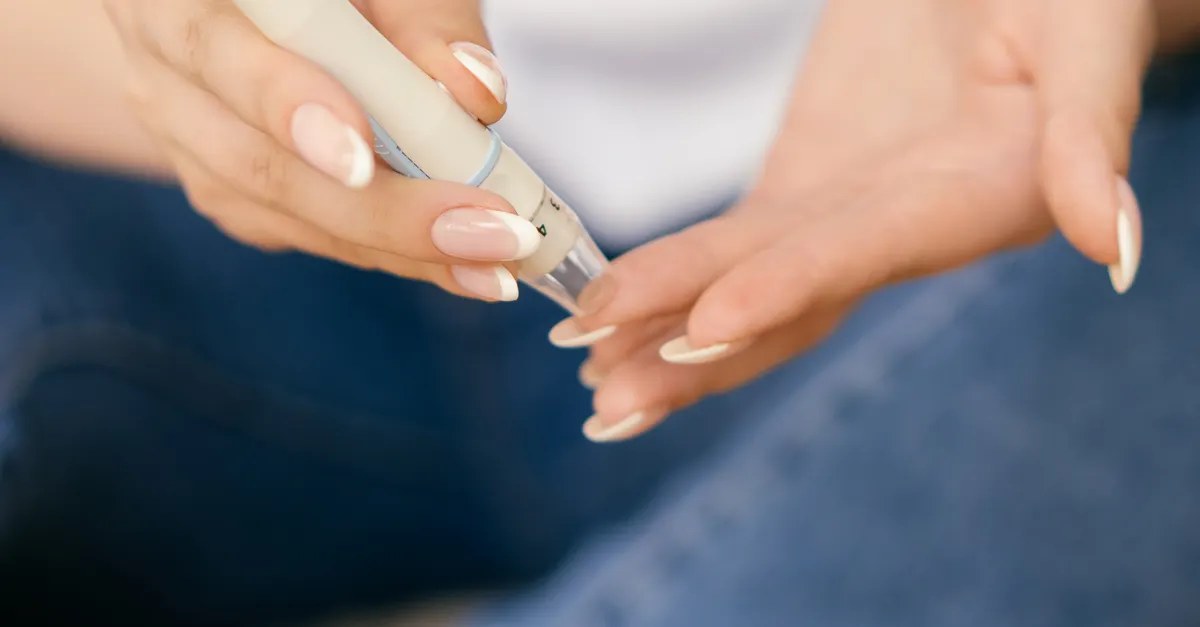
Do not go looking for a stool test for diabetes risk, and do not let any company sell you one on the back of this headline — the researchers themselves say that is not what this is. What you can take from it is more practical. First, the standard tests still matter, and they matter early: if you are over 40 and have not had your blood sugar checked, or you carry extra weight, have a family history of diabetes, or had gestational diabetes, ask your clinician about an HbA1c or fasting glucose test — those are the proven early-warning tools, and they are already available. Second, the after-meal angle is worth knowing: a normal fasting number does not always tell the whole story, which is why clinicians sometimes use an oral glucose tolerance test or look at the fuller picture rather than one number. Third, while this study did not test any diet or probiotic, the general, well-established advice for gut health still stands on its own evidence: a varied diet rich in vegetables, legumes, whole grains, and other fiber-rich foods feeds a diverse microbiome, and regular movement and keeping weight in check are the proven levers for diabetes prevention. The gut may one day add another layer to risk assessment. For now, the honest version is this: your gut bacteria may be whispering before your blood sugar shouts — but the blood test is still the one to listen to.
Sources
Baldanzi G, Segata N, et al., "Gut microbiome can reveal risk of type 2 diabetes," presented at the European Association for the Study of Diabetes (EASD) Annual Meeting, Milan, Italy, September 28–October 2, 2026 (229,025 adults in the UK and US, 73.8% female, average age 50; 3,627 with type 2 diabetes, 14,022 with prediabetes, 211,376 normoglycemic; metagenomic stool DNA; after adjusting for age, sex, and BMI, 789 species associated with type 2 diabetes — 168 at higher levels, 621 at lower levels; Enterocloster bolteae more abundant, Romboutsia timonensis depleted; 587 of the 789 also associated with unmedicated prediabetes; among more than 135,000 people with normal blood glucose, those whose blood sugar remained elevated longer after meals were more likely to show the diabetes-linked pattern, strengthening with insulin resistance; researchers do not suggest replacing HbA1c, fasting glucose, or oral glucose tolerance testing; association, not proof of causation; diabetes medication appeared to influence some differences). Institutional press release via EASD: MedicalXpress, "Gut microbiome can reveal risk of type 2 diabetes" (September 27, 2026). Independent coverage: Knowridge, "Your gut bacteria may warn diabetes early" (September 29, 2026); Health and Family, "Gut microbiome shifts may signal type 2 diabetes years before blood sugar rises" (September 2026) (135,093 in the normal-glucose subgroup; ADA/EASD expert-forum caution on standardization, reproducibility, and causality).
Studies cited · Evidence summarized, not medical advice
Keep Going
▶️ Watch the videos: Health After 40 Science on YouTube
🌐 Guides, reviews & free checklists: healthafter40science.com
📚 The Health After 40 Bundle — all five guides in one: get the bundle
Get the Free Weekly Email: